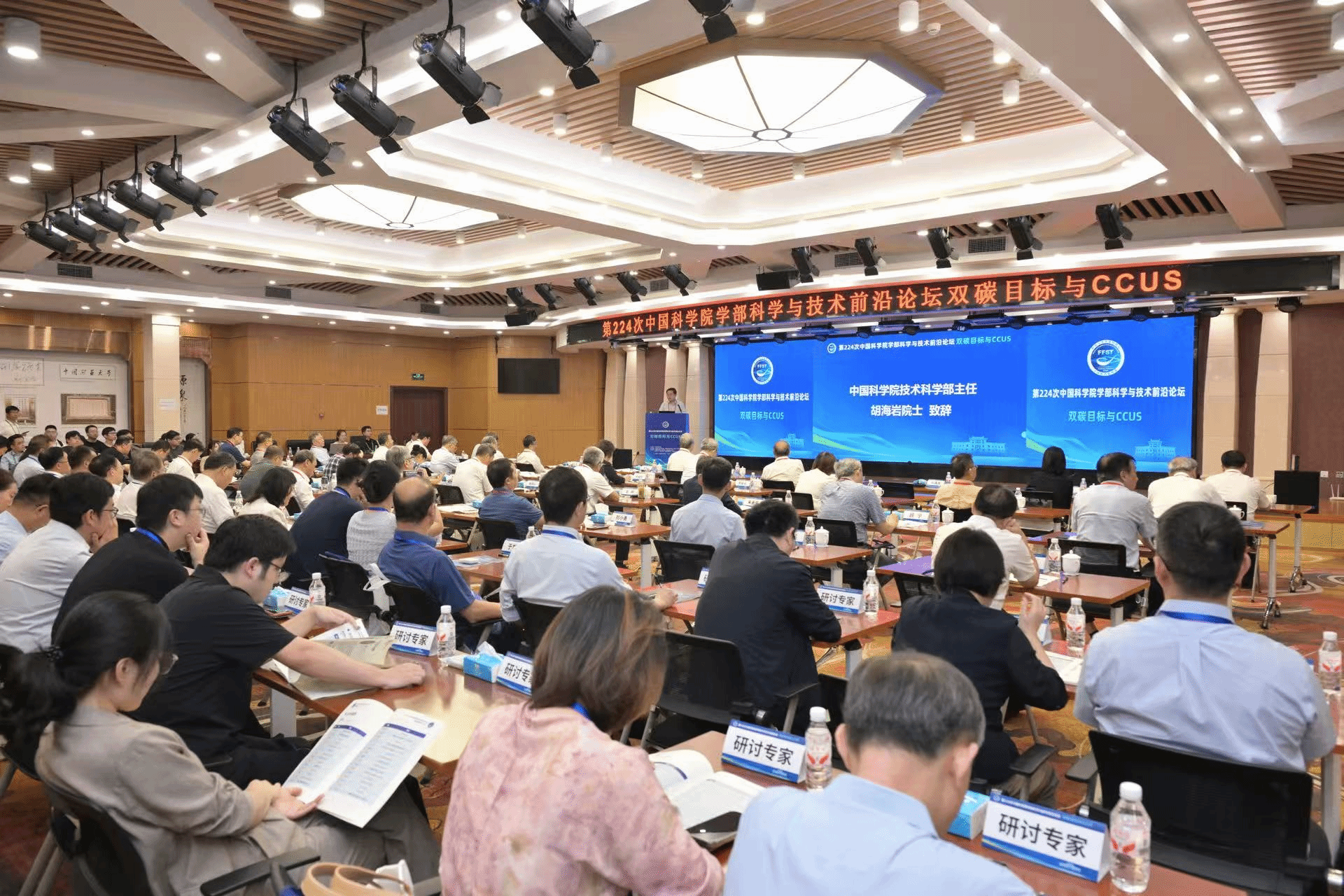

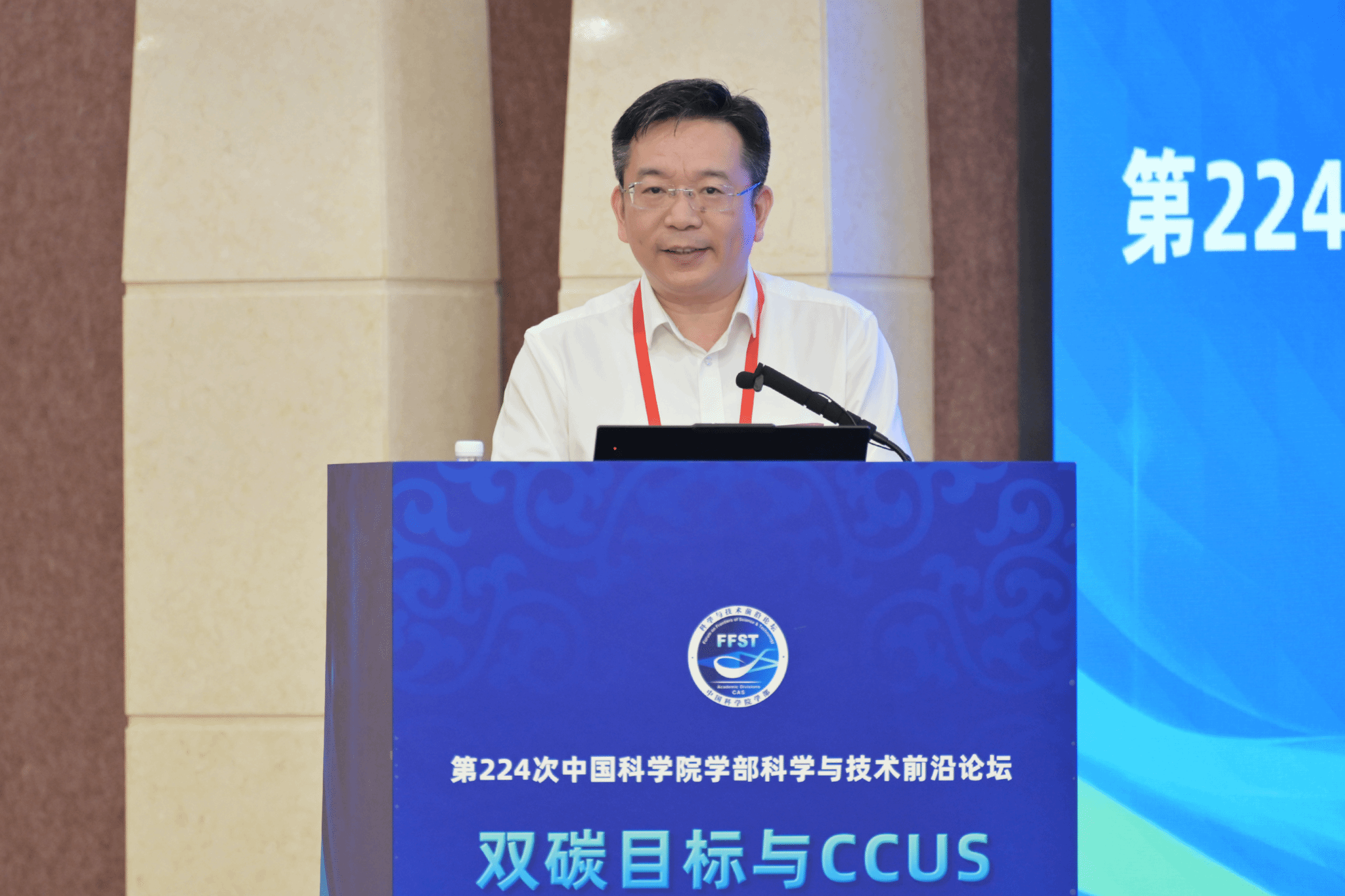
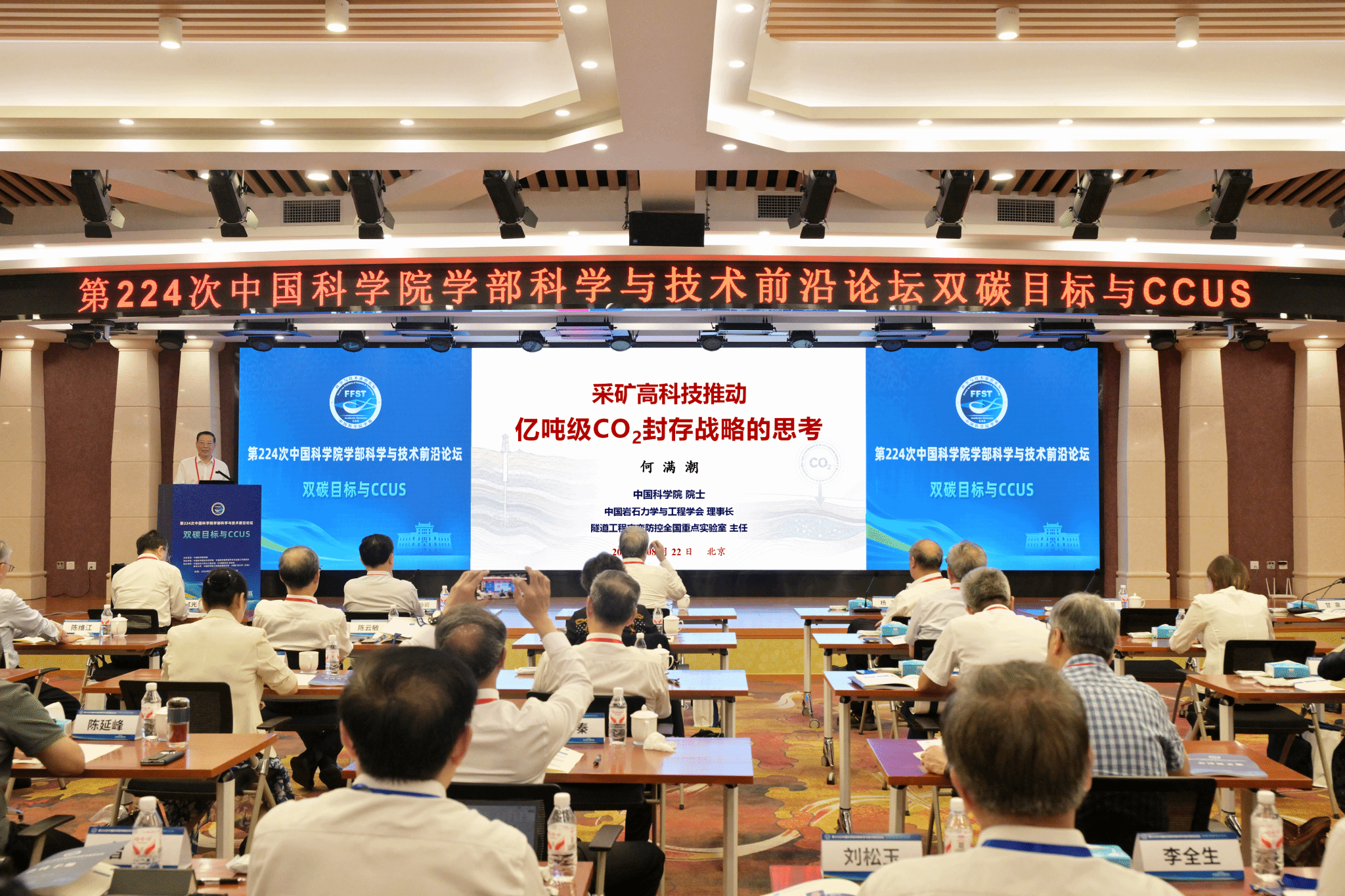
From our correspondent — On August 21–22, the 224th Frontiers of Science and Technology Forum of the Academic Divisions of the Chinese Academy of Sciences themed “Dual Carbon Goals and CCUS” was held in the Fuzhongyuan Lecture Hall of the University. Academician Hu Haiyan, Director of the Division of Technical Sciences of the Chinese Academy of Sciences; Gan Quan, Deputy Director-General of the Bureau of Academic Divisions of the Chinese Academy of Sciences; Han Shangfeng, Secretary of the University Party Committee; and Liu Bo, President of the University, attended the opening ceremony. The opening ceremony was presided over by the Executive Chair, Academician He Manchao of the Chinese Academy of Sciences and Professor of the University.
Organized by the Division of Technical Sciences and the Academic and Publishing Committee of the Academic Divisions of the Chinese Academy of Sciences, co-organized by the Chinese Society for Rock Mechanics and Engineering, Science China Press, Tsinghua University, the Institute of Engineering Thermophysics of the Chinese Academy of Sciences and China University of Mining and Technology, Beijing, the forum appointed Academicians He Manchao, Jin Hongguang and Jiang Peixue as joint Executive Chairs. Twenty-nine academicians from the Division of Technical Sciences of the Chinese Academy of Sciences, together with experts and scholars from research institutes, universities, enterprises and the journal Science China: Technological Sciences, participated in the forum. They exchanged and discussed key scientific issues and engineering technologies across the full chain of carbon dioxide capture, utilization and storage (CCUS) under the dual carbon goals.
In his address, Liu Bo stated that achieving the dual carbon goals constitutes a systematic project, and CCUS serves as an essential component of China’s carbon neutrality technology system. CUMTB will leverage its distinctive strengths in mining disciplines, promote interdisciplinary integration of mining engineering, energy engineering and geological engineering with carbon science, new energy and environmental science, and contribute to building a powerful energy nation and the national green and low-carbon transition.
Centered on “Dual Carbon Goals and CCUS”, the academic presentation session was presided over successively by Academicians Jin Hongguang, Jiang Peixue and He Manchao. Fifteen experts and scholars including Academician He Manchao and Academician Han Buxing were invited to deliver keynote speeches. The presentations covered carbon monitoring, carbon capture, carbon storage and carbon utilization, systematically showcasing China’s latest scientific and technological achievements in CCUS. In-depth discussions were held on critical topics such as breakthroughs in basic theories, interdisciplinary integration, and the link from key technologies to demonstration of major engineering projects.
The forum noted that peaking carbon dioxide emissions and achieving carbon neutrality represent systemic socioeconomic transformation, and CCUS is a vital pathway for advancing low-carbon transition and deep decarbonization. The development of CCUS requires collaborative research across multiple disciplines. It is necessary to strengthen basic research and breakthroughs in core technologies, optimize the layout of carbon sources, transportation and storage, boost the connection among scientific research, engineering and industry, and improve the techno-economic performance, safety and reliability of relevant technologies, so as to provide scientific and technological support for delivering the dual carbon goals.


