On December 29, 2025, the exhibition “Forging the Path to National Strength: China’s Manufacturing Achievements under the 14th Five-Year Plan” officially opened at the National Museum of China. In the integrated development exhibition zone, a sand-table model of a robotic autonomous transportation and loading system for large-scale open-pit mines—jointly developed by China University of Mining and Technology-Beijing and China Energy Investment Corporation—made a high-profile appearance. This marks the debut of the industry–university–research collaborative innovation achievements of the two sides at a national-level exhibition venue, fully demonstrating the top technological strength in the construction of smart mines.
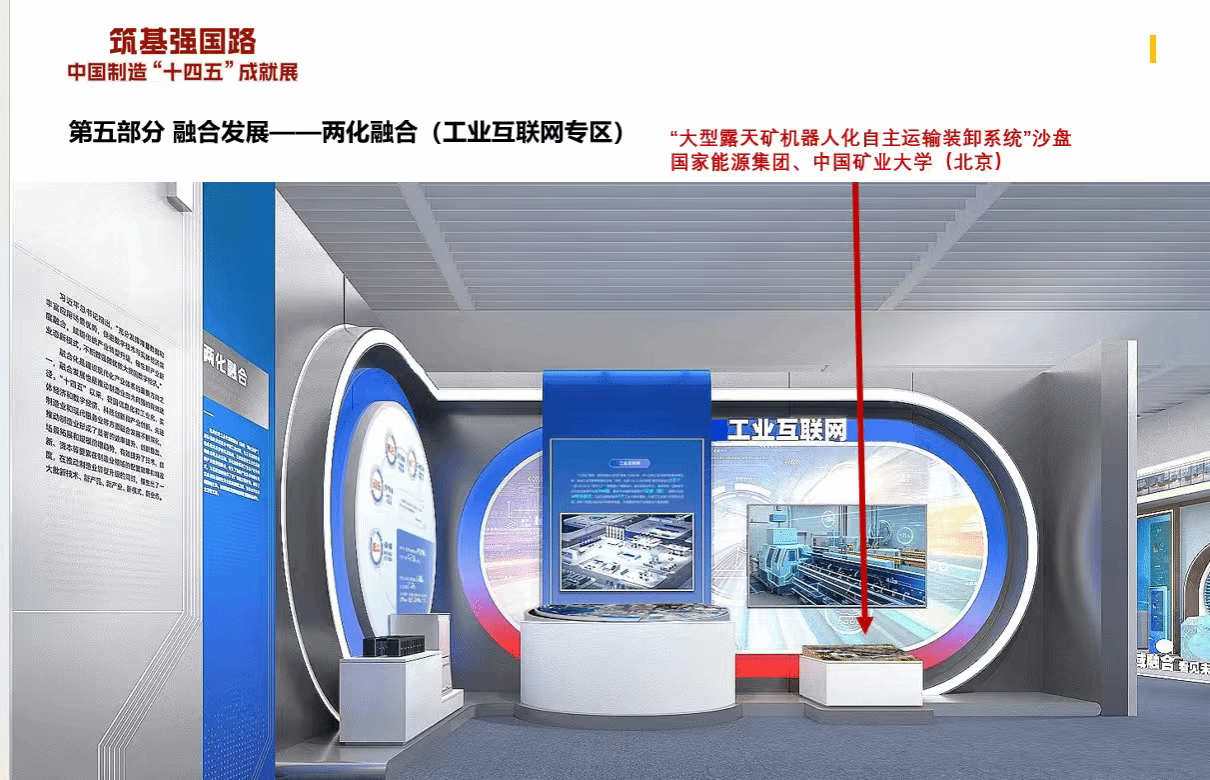
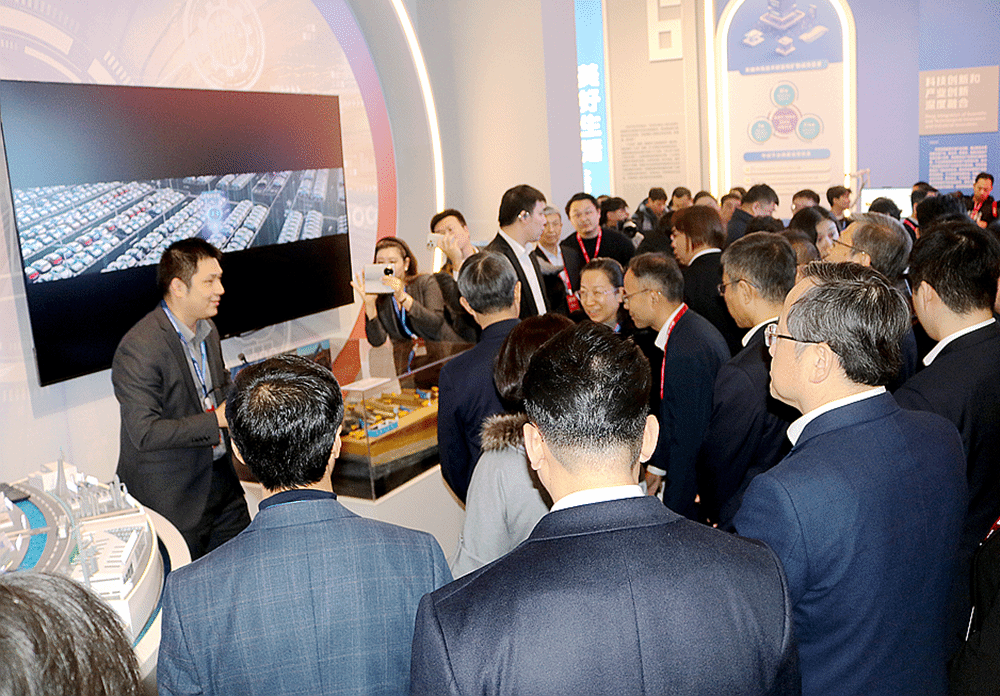
Exhibition Site at the National Museum of China
The exhibit is based on real-world operations at the Heidaigou Open-Pit Coal Mine of China Energy Investment Corporation’s Zhunneng Group, featuring a model measuring 1000 mm × 1000 mm × 300 mm. Through precisely replicated unmanned haul trucks and electric shovels, together with a rational layout and coordinated operational demonstrations, the exhibit vividly recreates the fully automated workflow of open-pit mining—from excavation and loading to transportation and dumping—enabling visitors to gain a direct understanding of the intelligent transformation of traditional energy industries.
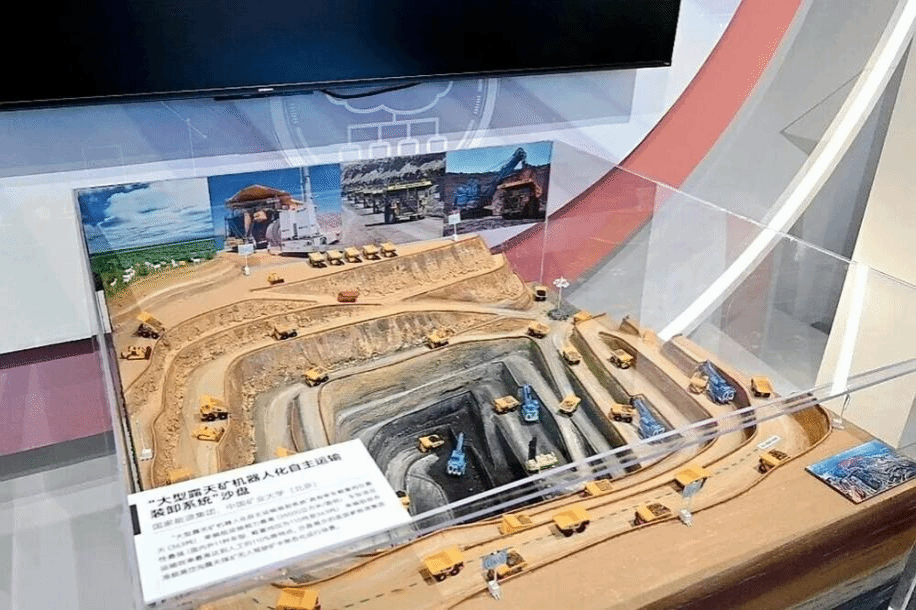
Sand-Table Model of the Autonomous Mining System
As a benchmark for university-enterprise collaborative innovation, the system leads the industry in multiple core technical indicators. In terms of performance parameters, the driverless mining truck boasts a payload capacity of up to 363 tons, setting a record high among similar products in the industry. The peak transportation capacity of a single convoy reaches 35,000 cubic meters per shift, with overall transportation efficiency hitting 110% of that under manual operation. In terms of adaptability, the system is compatible with nine different vehicle models at home and abroad, with payloads ranging from 185 tons to 363 tons. It can flexibly meet the operational needs of various open�pit coal mines, steadily advancing the industry toward fewer personnel and full unmanned operation across all production links. At present, the system has realized regular and large-scale operation of driverless mining trucks at Heidaigou Open-pit Coal Mine, Jungar Energy.
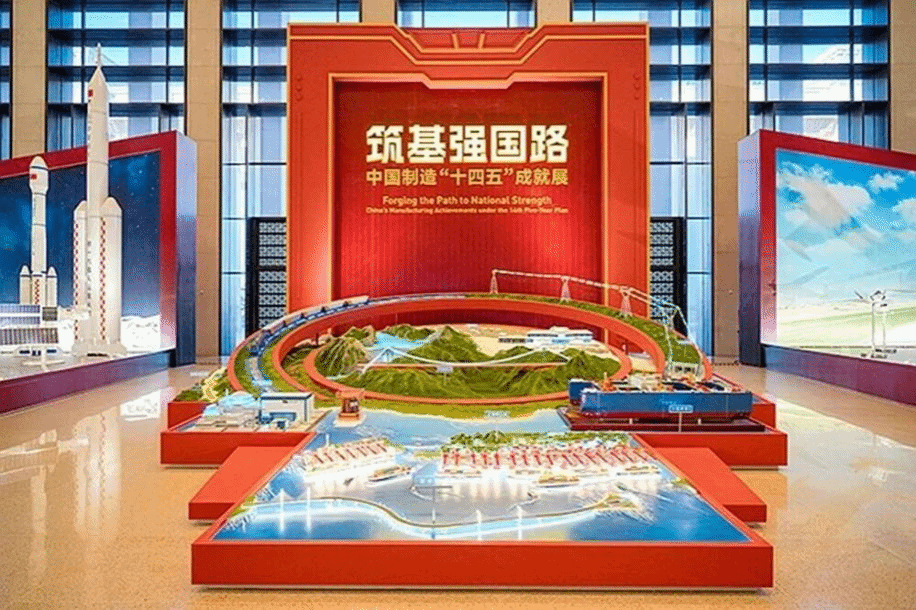
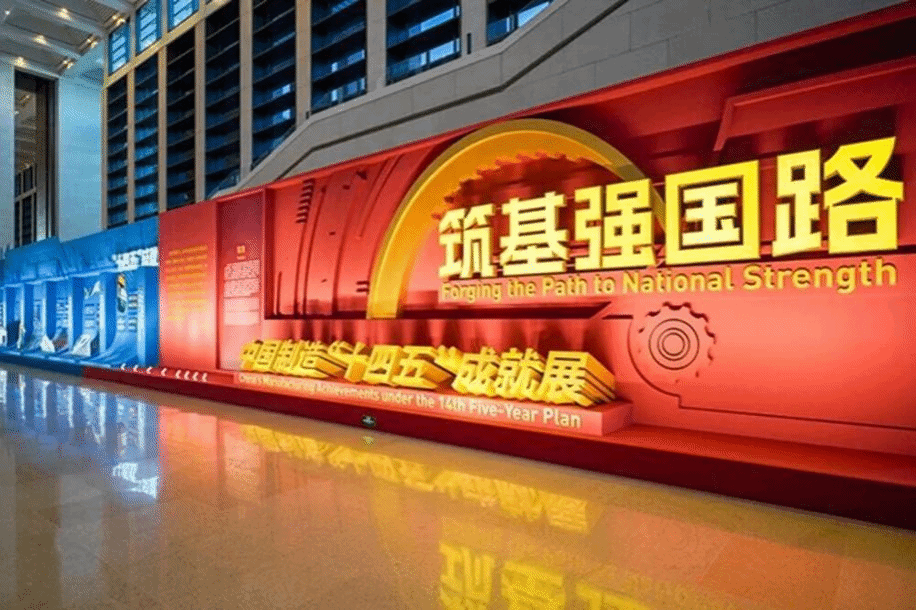
14th Five-Year Plan Achievement Exhibition Site
The exhibition, jointly organized by the National Museum of China and the News and Publicity Center of the Ministry of Industry and Information Technology, will run for five months. As one of the National Museum’s annual national exhibitions, it features more than 300 representative exhibits from the 14th Five-Year Plan period, covering landmark achievements in high-end manufacturing, industrial foundations, and intelligent manufacturing, and provides a full picture of the robust development of China’s manufacturing sector during this period.
The showcased system forms part of the National Key R&D Program’s “Intelligent Robotics” initiative, led by Academician Ge Shirong and undertaken by China Energy Investment Corporation, with participation from the intelligent mining team of the School of Mechanical and Electrical Engineering. It marks an important breakthrough in deepening industry–university–research collaboration and advancing key core technologies, and exemplifies the University’s role in leveraging disciplinary strengths to support industrial transformation and upgrading. The project was presented as a representative achievement at a national conference on science and technology innovation during the 14th Five-Year Plan period, where it was described as “a Chinese solution for advancing the intelligent upgrading of the global mining industry.”
Looking ahead, the University will continue to address the cutting-edge demands of smart mining, advance technological innovation and the commercialization of research, and better support national energy security and high-quality manufacturing development. It will also advance high-level scientific and technological self-reliance and contribute to building China into a leading country in education and energy.


