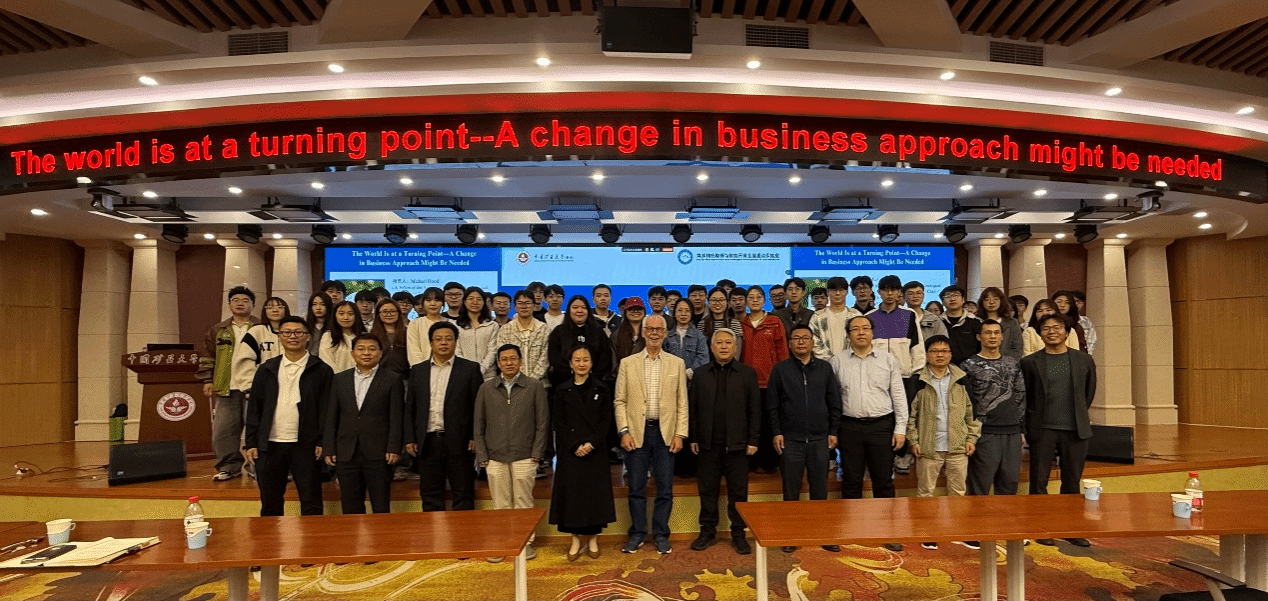
From our correspondent — On April 19, at the invitation of the State Key Laboratory of Coal Fine Exploration and Intelligent Development, School of Energy and Mining Engineering, School of Emergency Management and Safety Engineering, and School of Geoscience and Surveying Engineering of China University of Mining and Technology-Beijing, Professor Michael Hood, Fellow of the Australian Academy of Technology and Engineering and Foreign Member of the Chinese Academy of Engineering from the University of Queensland, delivered an academic lecture entitled The World Is at a Turning Point—A Change in Business Approach Might Be Needed in the Fuzhongyuan Lecture Hall. Centered on the evolving global landscape, the presentation covered the advancement of mining and energy technologies, innovations in international cooperation models, and future opportunities for China-Australia collaboration.
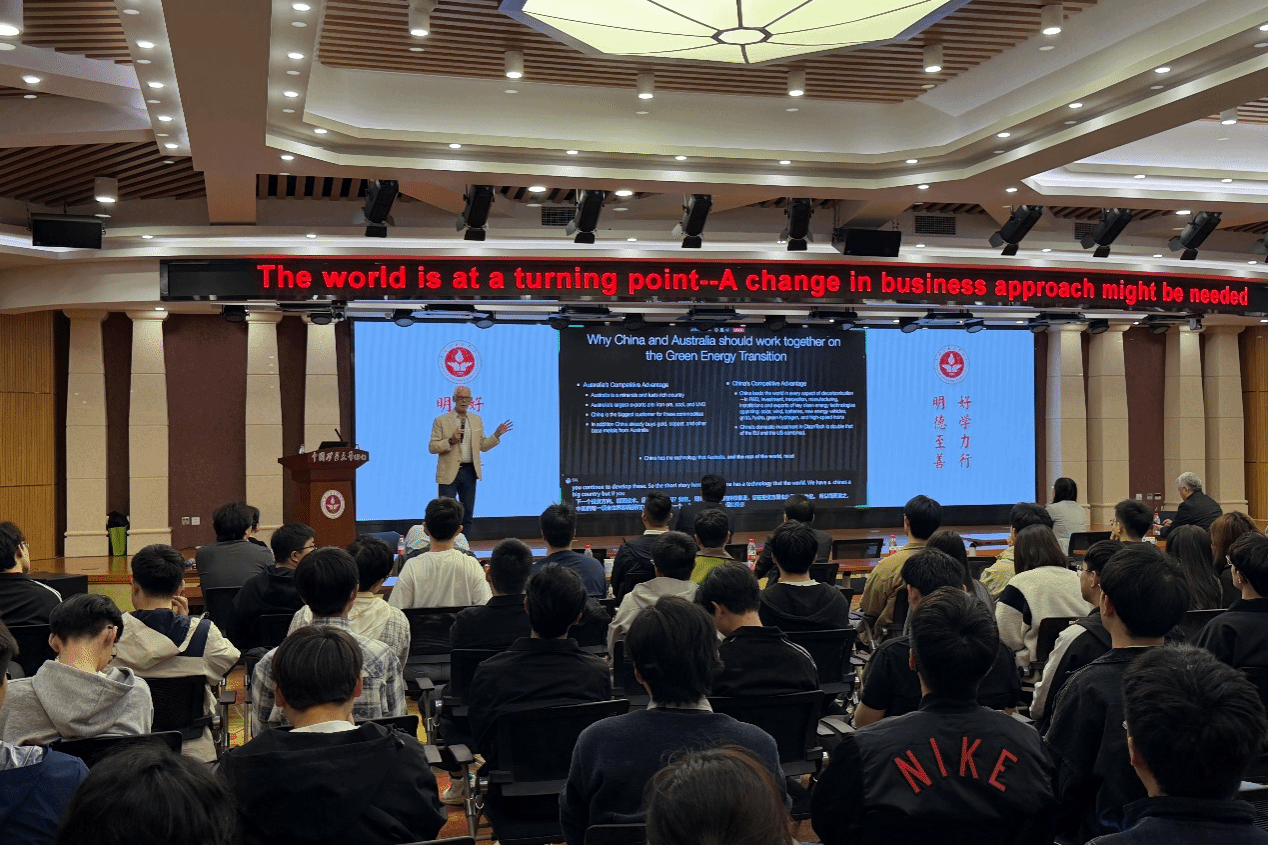
In his lecture, Professor Hood analyzed the ongoing shifts in the global economy and industrial landscape and noted that the world stands at a critical turning point, where traditional development models dominated by pure competition are facing new challenges. He emphasized that China holds a leading global position in pumped hydro storage, compressed air energy storage (CAES) and flow batteries, and has emerged as a major global technological and industrial leader in photovoltaic solar power. China refines approximately 70% of 19 key energy-related minerals and controls around 60% of rare earth extraction and 90% of rare earth refining capacity worldwide.
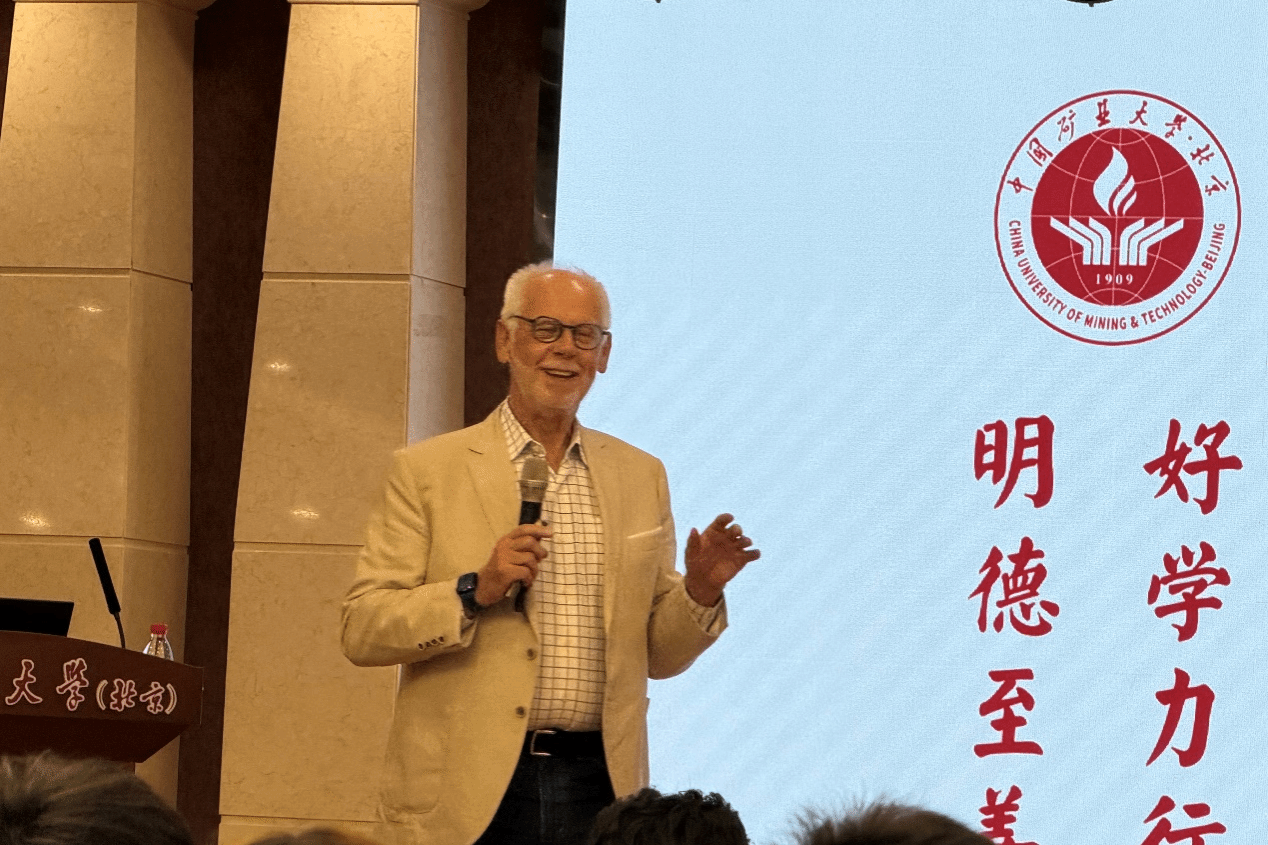
Professor Hood stressed that for high-tech products and green energy technologies to further penetrate international markets, technological superiority and cost advantages alone are insufficient. It is equally important to build mutual trust, enhance “soft power”, and foster more collaborative, shared and sustainable international business models. As he put it, “History may be competitive, but the future should be cooperative,” and “Trust is built not by words, but by actions.”
Regarding the prospects for China-Australia cooperation, Professor Hood pointed out that the two countries enjoy strong complementarity in mining, energy and green low-carbon development. China boasts distinct strengths in new energy storage technologies, mineral processing and the industrialization of clean energy, while Australia has accumulated rich experience in mine environmental engineering, resource development governance and relevant standardized management. Particularly in areas such as environmental management for rare earth mining and processing sites, and ecological restoration resulting from nickel ore processing, pragmatic cooperation between both sides can deepen mutual trust, expand markets and jointly advance global net-zero emission goals.